Research notes and ingredient guides
Evidence-led articles from JellyBoost: what the research supports on the individual ingredients, realistic timelines, and how to read a label.

Alcohol, Sugar and Testosterone: What to Cut First
How alcohol and added sugar lower testosterone - through disrupted sleep, insulin resistance and visceral fat - and a realistic order for cutting them back without going teetotal.

Ashwagandha, Cortisol and Testosterone: The Stress-Drive Connection
How ashwagandha lowers cortisol and perceived stress, the testosterone and DHEA-S rises reported in trials, the 250-600 mg studied dose, and where a 100 mg label lands.
Ashwagandha vs Tongkat Ali: Which for Stress, Which for Drive?
Ashwagandha is the cortisol and stress lever with the strongest human evidence; Tongkat Ali is the free-testosterone and drive lever. Doses, timelines.
Beet Root Nitrates for Blood Flow and Stamina
How beet root nitrates become nitric oxide to widen blood vessels and support stamina - and what the 50 mg on the JellyBoost label really does compared with the doses used in research.

How to Boost Libido Naturally in Your 40s and 50s
Why libido dips in your 40s and 50s - falling testosterone, vascular changes, stress and sleep debt - and the natural levers that actually help: blood flow.
Do Testosterone Booster Supplements Actually Work? An Honest Look
An evidence-based look at whether testosterone booster supplements work: which ingredients have real human data, why deficiency and stress change the answer.
Exercise and Testosterone: What Actually Moves the Needle
Which workouts really raise testosterone: resistance training and HIIT produce the clearest response, while overtraining and excess endurance can suppress it.
Foods That Support Testosterone (and 4 That Quietly Lower It)
The foods that genuinely support testosterone - zinc, vitamin D, magnesium, pomegranate and healthy fats - plus the four everyday foods that quietly work against it. Honest, mechanism-first.
Grape Seed Extract: The Overlooked Antioxidant in Men's Formulas
What grape seed extract and its proanthocyanidin antioxidants really do for endothelial and vascular health, the doses used in research, and why it is a supporting-cast ingredient in men's vitality formulas.
Horny Goat Weed (Icariin): What the Evidence Actually Shows
Icariin is a mild PDE5 inhibitor that supports nitric oxide, but the human evidence is thin and mostly preclinical. What horny goat weed can and cannot do.
How Long Do Testosterone-Support Supplements Take to Work?
Realistic timelines for tongkat ali, ashwagandha and a full men's stack - from 2-4 weeks to a full 8-12 weeks - why consistency beats loading.
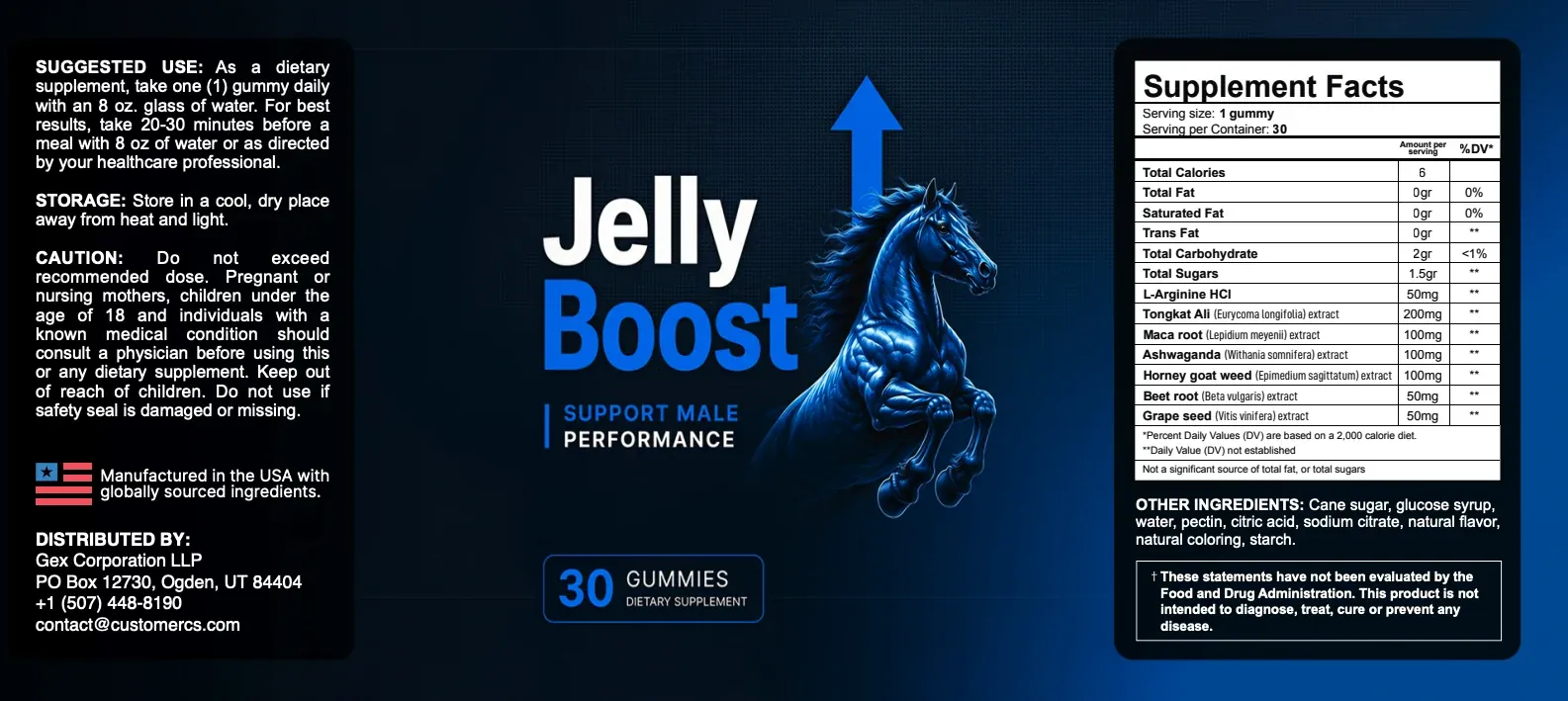
How to Read a Men's Supplement Label: 7 Red Flags
A 90-second method for reading a men's supplement label: find the Supplement Facts panel, reject proprietary blends, check the headline dose and standardisation, and spot fairy-dusting - with JellyBoost's panel as the worked example.
Natural Ways to Improve Blood Flow for Better Erections
Erections are vascular - driven by nitric oxide and healthy circulation. The natural levers that help: dietary nitrates, arginine and citrulline, cardio.
How to Increase Testosterone Naturally: 10 Evidence-Based Ways
Ten realistic, evidence-based ways to raise testosterone naturally - sleep, lifting, fixing vitamin D, zinc and magnesium, losing visceral fat.
JellyBoost Ingredients Explained: All Seven Actives
A full walk-through of every ingredient in JellyBoost - Tongkat Ali, Maca, Ashwagandha, Horny Goat Weed, L-Arginine, Beet Root and Grape Seed - with each dose.
L-Arginine and Nitric Oxide: Why the Dose on Most Labels Is Too Small
L-arginine is a nitric-oxide precursor, but circulation studies dose it in grams. Why 50 mg is a nudge not a functional dose, how it pairs with beet root nitrates, and why L-citrulline absorbs better.
Maca Root for Men: Libido, Dose, and How Long It Takes to Work
What maca root does for men's libido, the 1,500-3,000 mg dose used in human trials, why it does not raise testosterone, and how the 100 mg on a gummy label really fits in.
Morning Testosterone: Why Levels Peak Early and How to Use It
Testosterone follows a daily rhythm - highest in the early morning, lowest at night. Why that happens, what it means for blood tests, training and sex.
Proprietary Blends: How They Hide the Dose
What a proprietary blend is, why supplement brands use them, what label law actually allows, how to spot one in seconds, and why JellyBoost's fully split seven-active panel is the better model.
Sleep and Testosterone: The Overlooked Lever
Most testosterone is made during sleep, and short sleep can cut daytime levels 10-15%. Why sleep apnea is a hidden T killer, plus the sleep hygiene that protects male hormones.
How to Increase Stamina and Energy for Men Over 40
Why energy dips after 40 and the levers that actually move it back: sleep, zone-2 cardio and resistance training, dietary nitrates, stress control.
Stress, Cortisol and Male Sex Drive
Why chronic stress lowers male libido, how cortisol and testosterone work like a seesaw, and the evidence-based levers - sleep, exercise, breathwork and ashwagandha - that bring desire back.
Tongkat Ali Dosage: What 200 mg Actually Buys You (2026 Evidence Check)
How much Tongkat Ali is in a men's vitality gummy, how that compares with the doses used in human trials, and what the other six actives on the JellyBoost label are really doing.
Tongkat Ali Standardisation: Why Eurycomanone % Beats Milligrams
Two 200 mg Tongkat Ali extracts can differ several-fold in strength depending on standardisation. Here is why the eurycomanone percentage matters more than the milligram figure, and how to read a label for it.
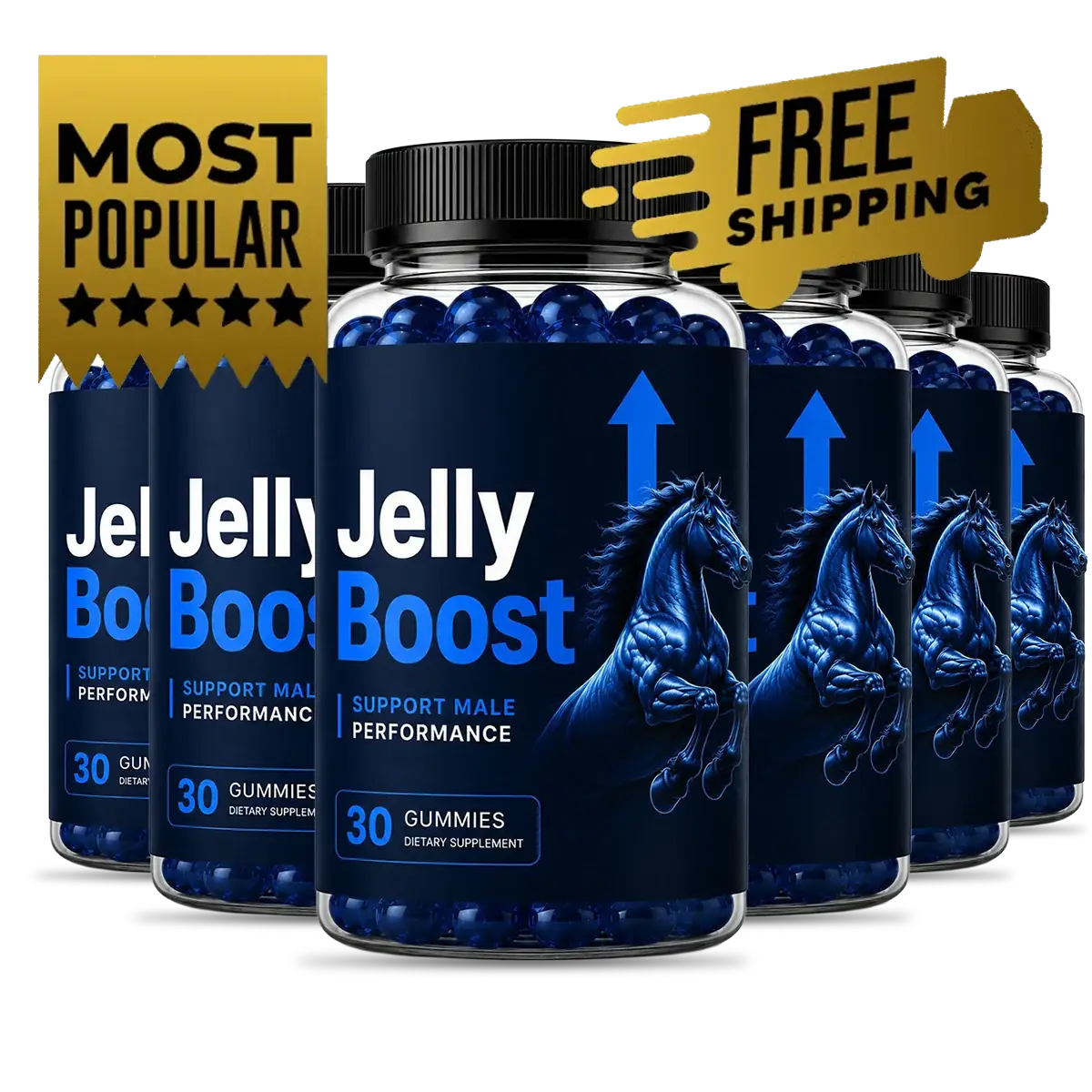
Male Vitality Gummies vs Pills: Which Is Actually Better?
An honest look at male vitality gummies vs pills - adherence, taste and discretion versus dose density and sugar - and why a transparent, adequately dosed label matters more than the format.
Zinc, Magnesium and Vitamin D: The Mineral Base for Men's Hormones
Why zinc, magnesium and vitamin D are the foundation for male testosterone: deficiency lowers it, correcting a shortfall helps, and megadosing when replete does not. Food sources and sensible doses.