Proprietary Blends: How They Hide the Dose
Quick Answer: What Is a Proprietary Blend?
A proprietary blend groups several ingredients under one combined milligram total, without disclosing how much of each is inside. You see the total but not the split, so you cannot tell if the headline ingredient is at a real dose or a trace. It is legal — and it exists to keep you from checking.
- The tell: one milligram figure covering several named ingredients.
- The effect: the per-ingredient dose is hidden from you.
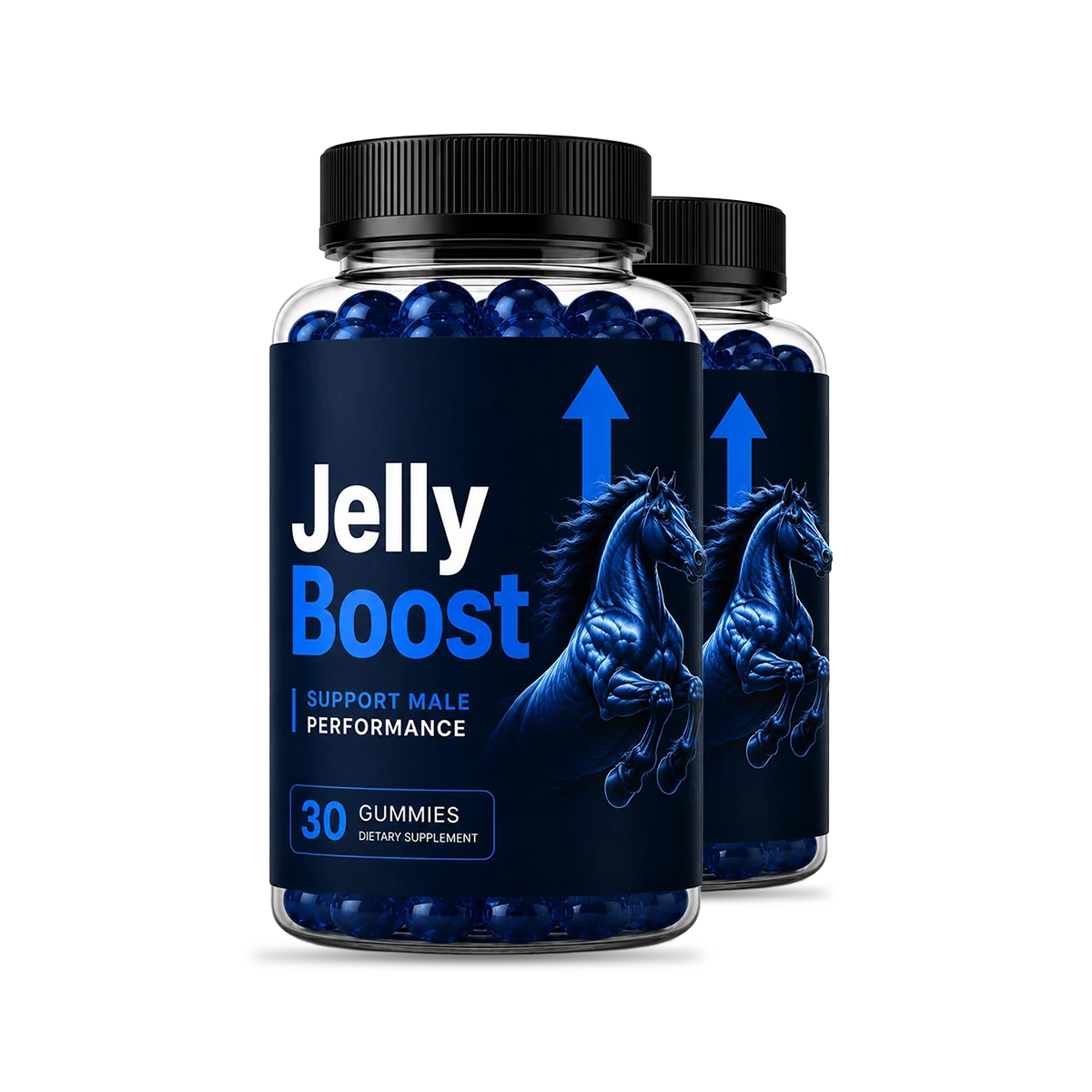
- The fix: buy formulas that split every active out, like JellyBoost.
The single number that hides everything
Picture a men's vitality label that reads: "Vitality & Drive Matrix — 800 mg: Tongkat Ali, Maca, Horny Goat Weed, L-Arginine, Tribulus, Zinc." One number, six ingredients. It looks substantial. Eight hundred milligrams is a solid-sounding figure, and all the ingredients you were hoping for are named. But you have just been shown almost nothing. That 800 mg could be 700 mg of the cheapest filler in the list and 20 mg each of the rest. Or it could be a genuine 300 mg of Tongkat Ali. The label reads identically in both cases, and there is no way for you to tell them apart. That is a proprietary blend, and hiding the split is not a side effect of the format — it is the entire reason the format exists.
What the law actually allows
Here is the part that surprises people: this is legal. Under US labelling rules, a manufacturer may group two or more ingredients into a proprietary blend and declare only the total weight of the blend, listing the ingredients inside it in descending order by weight but without individual amounts. So the rules do give you two crumbs — the blend's total, and the order of ingredients within it. That order is genuinely useful: whatever is listed first is present in the greatest amount, whatever is listed last is present in the least. But "descending order" tells you the ranking, never the gap. First place could be 90 percent of the blend or 30 percent. The rule that was meant to let brands protect a genuine formula recipe has become, in practice, the standard way to avoid disclosing an inadequate dose.
Why brands use them
There are two honest reasons and one dishonest one, and it is worth separating them.
The legitimate reason is trade-secret protection. A brand that has spent real money developing a specific ratio of ingredients may not want competitors to copy it exactly. This is the justification the format was created for, and for a genuinely novel formula it is defensible.
The second, semi-legitimate reason is simple label tidiness on very long formulas — though that is weak, because nothing stops a brand from disclosing every amount.
The dishonest reason — and the common one — is cost. Effective doses of good ingredients are expensive. A blend lets a brand name an impressive, well-researched ingredient, put a token amount of it in the product, and fill the rest of the weight with something cheap, all while the label still lists the good ingredient prominently. The name does the selling. The dose does not have to deliver, because you will never see it. This practice even has a nickname in the industry: fairy-dusting.
How fairy-dusting works inside a blend
Fairy-dusting and proprietary blends are made for each other. On a fully disclosed label, fairy-dusting is visible — you can see that the headline herb is dosed at a fraction of its trial range and judge accordingly. Inside a blend, that same underdosing becomes invisible. The brand gets the marketing benefit of a respected ingredient without the cost of an effective amount, and without the risk that a careful buyer catches the shortfall. It is the difference between a claim you can check and a claim you simply have to take on faith. Almost every product that leans on faith over verification has a reason for wanting it that way.
How to spot one in ten seconds
You do not need to memorise the regulations. You need to recognise a pattern on the Supplement Facts panel:
- Look for grouping words: "blend," "matrix," "complex," "formula," "proprietary," or "support system," usually followed by a single milligram figure.
- Check whether that figure covers more than one ingredient. If several ingredients are listed under one shared total, that is a blend.
- Confirm the opposite on a good label: every active has its own separate milligram amount on its own line. That is full disclosure, and it is what you want.
One nuance worth knowing: a label can be partly disclosed — some ingredients broken out individually, others buried in a blend. Judge the blend part with the same scepticism regardless of how transparent the rest looks. For the full checklist, see our guide to reading a men's supplement label.
Why the standardisation problem stacks on top
A proprietary blend hides how many milligrams of an ingredient you are getting. Standardisation is a separate layer that governs how potent each of those milligrams is. Put them together and the fog is total: with a blended botanical extract that has no standardisation percentage, you know neither the amount nor the strength. Even on a fully disclosed label, the standardisation question remains — which is why we treat it as its own topic in Tongkat Ali standardisation and eurycomanone. The lesson is that transparency is necessary but not sufficient: you want the dose disclosed and the extract standardised.
The better model: a fully split panel
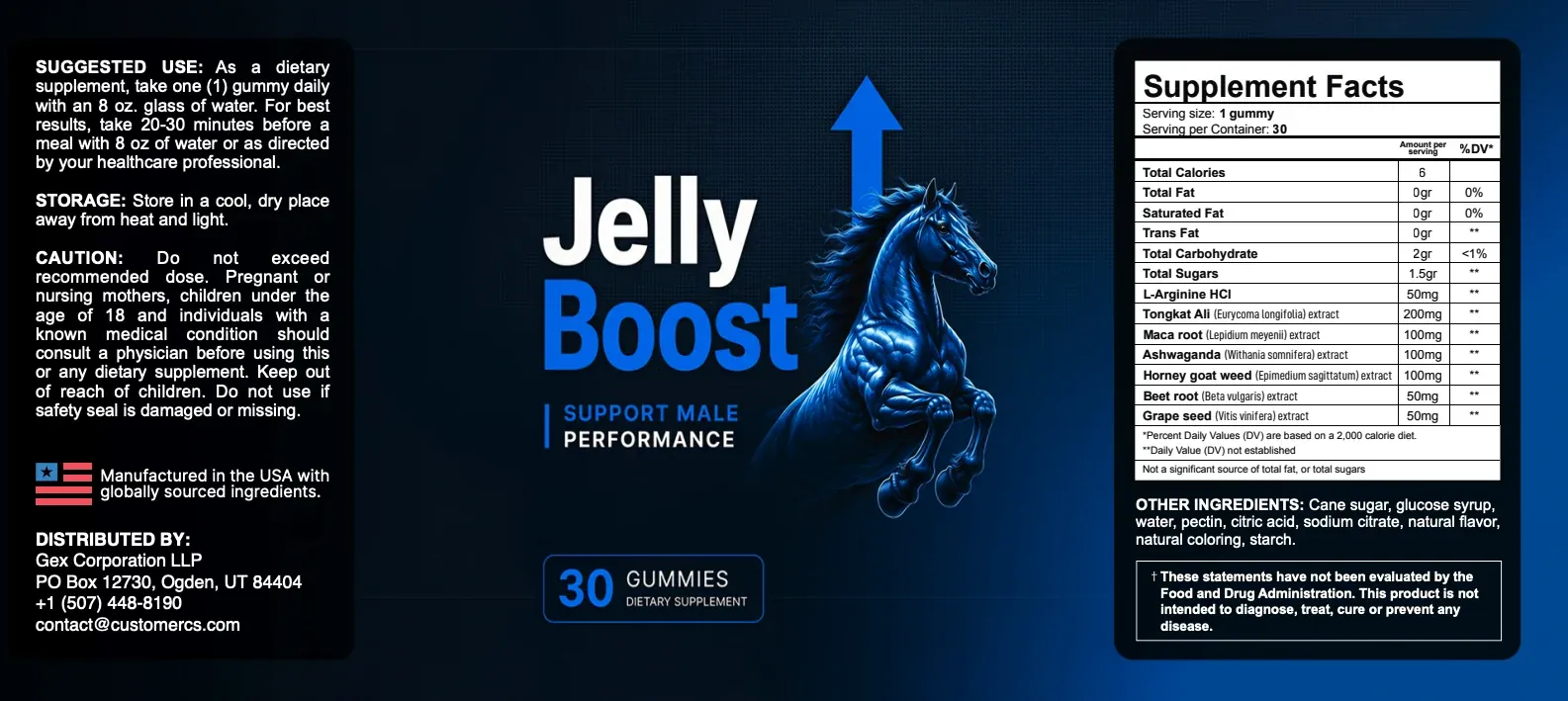
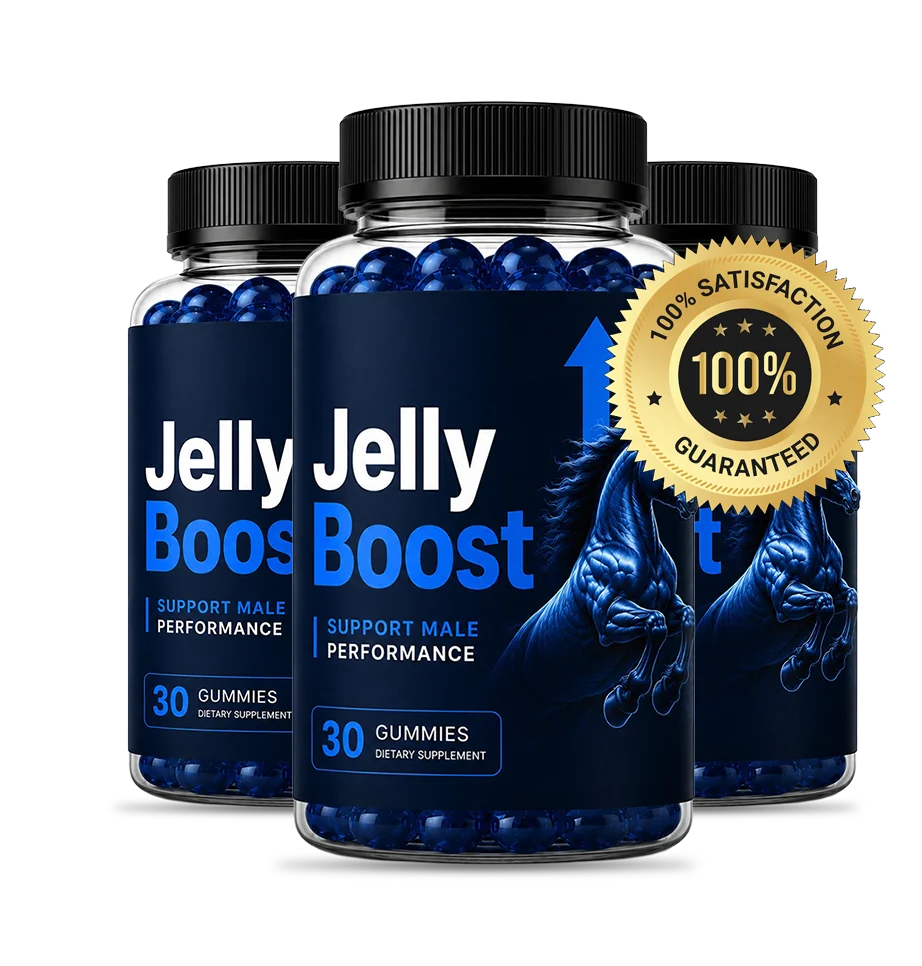
The alternative to a proprietary blend is not complicated — it is just a brand choosing to show you the numbers. JellyBoost is built this way, which is why we use it as the reference. Its panel lists all seven actives individually: Tongkat Ali 200 mg, Maca 100 mg, Ashwagandha 100 mg, Horny Goat Weed 100 mg, L-Arginine HCl 50 mg, Beet Root 50 mg and Grape Seed 50 mg. Nothing is grouped under a hidden total. That does not make the formula flawless — the L-Arginine at 50 mg is a supporting nudge rather than a functional dose, and no standardisation percentage is declared for the Tongkat Ali — but here is the point: you can see those limitations and weigh them yourself. A proprietary blend is specifically designed to prevent that. When the numbers are on the table, you get to be the judge instead of the mark.
Full disclosure is the baseline every buyer should demand, not a premium feature. If a brand will not show you how much of each ingredient is in the bottle, assume there is a reason, and spend your money where the reason to hide does not exist. You can see the whole JellyBoost breakdown in JellyBoost ingredients explained, and how format choices interact with dosing in gummies vs pills.
Frequently asked
What is a proprietary blend?
A proprietary blend is a group of ingredients listed on a supplement label under one combined weight, with no breakdown of how much of each is inside. You see a single total - say 800 mg for six herbs - but not the split, so you cannot tell whether the headline ingredient is at a real dose or a trace.
Why are proprietary blends bad?
They remove your ability to verify the dose. Because the per-ingredient amounts are hidden, a brand can put a cheap filler up front and a sprinkle of the expensive headline ingredient at the back, and the label looks the same either way. It also makes it impossible to compare the product against the doses used in research.
How do I avoid proprietary blends?
Scan the Supplement Facts panel for the words blend, matrix, complex or formula followed by one milligram figure covering several ingredients. If each ingredient has its own separate milligram amount, it is fully disclosed. If a group shares a single total, that is a proprietary blend - treat it as a reason to be sceptical.
Does JellyBoost use a proprietary blend?
No. JellyBoost lists all seven actives with their own individual doses - Tongkat Ali 200 mg, Maca 100 mg, Ashwagandha 100 mg, Horny Goat Weed 100 mg, and L-Arginine, beet root and grape seed at 50 mg each. Nothing is grouped under a hidden blend total, so you can check every number yourself.
Related reading
- How to read a men's supplement label: 7 red flags
- Tongkat Ali standardisation and eurycomanone
- JellyBoost ingredients explained: all seven actives
- Male vitality gummies vs pills: which is better?
See the current JellyBoost pricing
Full label, all seven actives, and today’s official-store discount.
These statements have not been evaluated by the Food and Drug Administration. This product is not intended to diagnose, treat, cure or prevent any disease. Speak to a qualified healthcare professional before starting any supplement.