How to Read a Men's Supplement Label: 7 Red Flags
Quick Answer: How Do You Read a Supplement Label?
Ignore the marketing and go straight to the Supplement Facts panel. Read the serving size, then each ingredient's milligrams. Check the headline ingredient against trial doses and its standardisation percentage. Count the actives on the panel versus the sales page. No panel, no purchase.
- Find the panel first: if there isn't one, walk away.
- Reject proprietary blends: they hide the per-ingredient dose.
- Match doses to trials: and look for a standardisation %.
The 90-second method
You do not need a nutrition degree to judge a men's vitality supplement. You need about ninety seconds and the discipline to look at the right box. Most of the money in this category is spent on the sales page — the hero shots, the testimonials, the "clinically studied ingredients" phrasing that never says at what dose. None of that is regulated the way the label is. The Supplement Facts panel is where the enforceable truth lives, and it is usually the one thing the marketing hopes you will skim past.
Below are seven red flags, in the order you should check them. Work top to bottom and you will filter out the majority of weak products before you ever reach the checkout.
Red flag 1: There is no Supplement Facts panel
This is the fastest disqualifier. In the US, a dietary supplement is legally required to carry a Supplement Facts panel listing its ingredients and amounts. If a product page shows you glossy ingredient icons and a "proprietary formula" story but you cannot find an actual panel — on the page, in the images, or on the bottle shot — treat that as a decision, not an inconvenience. A brand that hides its own panel is telling you something. No panel, no purchase.
Red flag 2: A proprietary blend
Once you have found the panel, scan for the words "proprietary blend," "matrix," or "complex" followed by a single milligram figure covering several ingredients. That single number is the trick. A blend lets a brand tell you the total weight of, say, six herbs, without telling you how that weight is divided. The headline ingredient might be a genuine dose — or it might be a sprinkle, with a cheap filler making up the rest. You cannot tell, and that is the point. It is legal, but it removes your ability to verify anything. We break down exactly how this works in proprietary blends: how they hide the dose. When you see one, be sceptical of the entire label.
Red flag 3: The headline dose is below trial ranges
Now do the part that actually predicts whether a product can work. Take the star ingredient — the one the whole brand is built around — and compare its milligrams against the doses used in human studies. This is where a surprising number of products fall apart. A formula can name an impressive, well-researched ingredient and then include a fraction of the amount the research actually used. The name earns the credibility; the dose quietly does not deliver it. Keep a rough mental library of trial ranges: Tongkat Ali around 200–400 mg, Maca 1,500–3,000 mg, Ashwagandha 250–600 mg. If the panel is far under, the ingredient is on the label mostly to be named.
Red flag 4: An extract with no standardisation percentage
Milligrams are only half the story for botanical extracts. What matters is how much of the active compound those milligrams contain — the standardisation. Tongkat Ali is the classic case: its effect is tied to its eurycomanone content, and a 200 mg extract standardised to a high eurycomanone percentage can be several times more potent than a 200 mg extract that is barely standardised at all. If a label names an extract but gives no standardisation percentage, you know the weight but not the strength. We dig into this specific case in Tongkat Ali standardisation and eurycomanone. It is a genuine limitation to note even on otherwise transparent labels — ours included.
Red flag 5: Gram-scale ingredients dosed in milligrams
Some ingredients only do their job in gram quantities, and a few brands include them anyway at double-digit milligrams so the name can appear on the label. The clearest example is L-Arginine. The circulation and nitric-oxide literature on arginine uses grams; a dose like 50 mg is a rounding error against that. It is not useless — it can nudge the same nitric-oxide pathway that dietary nitrates feed — but it is not carrying the formula, and any page that implies otherwise is overselling. When you see a gram-scale ingredient listed in tens of milligrams, read it as supporting cast, never as a lead.
Red flag 6: The panel and the sales page disagree
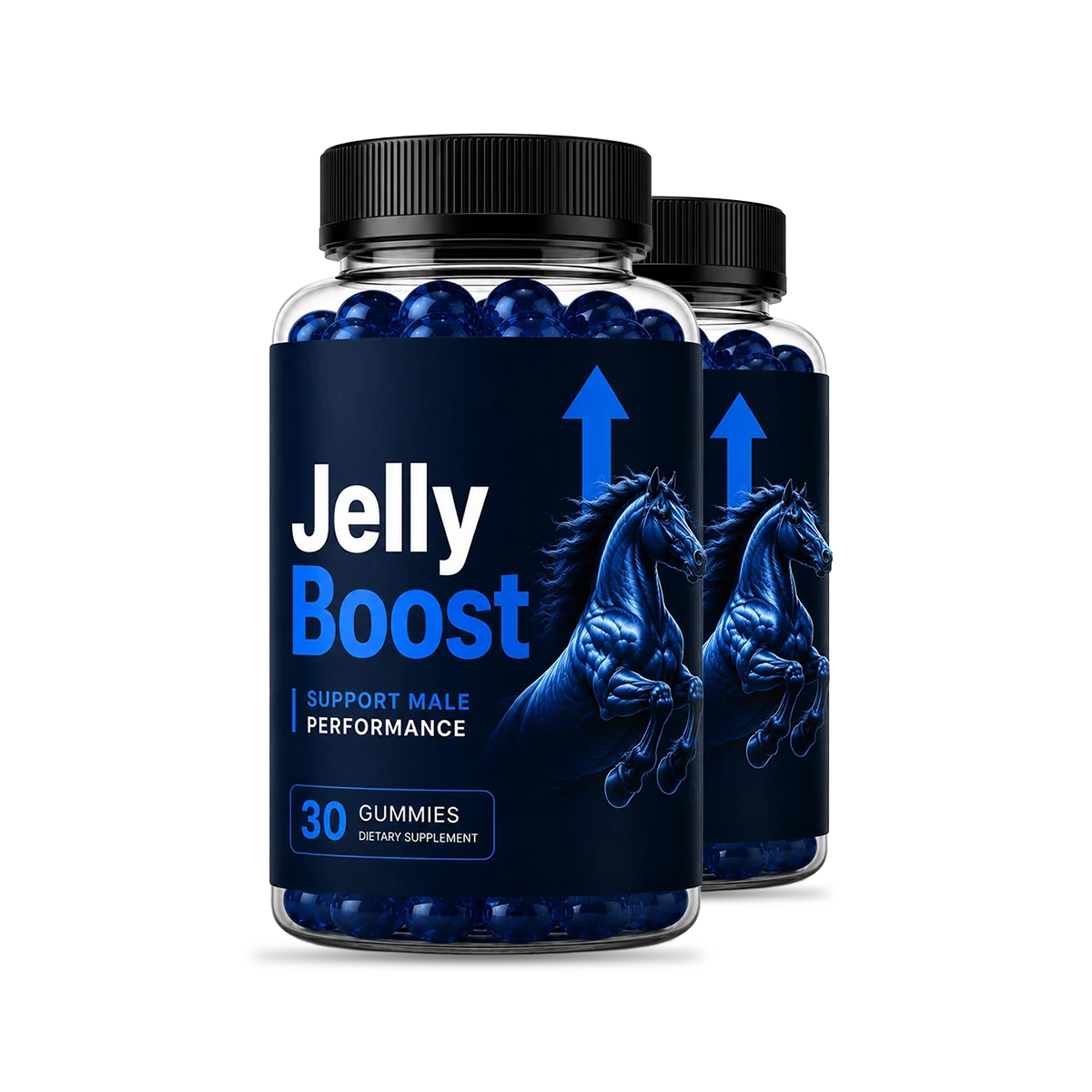
Count the active ingredients on the Supplement Facts panel. Then count the ones the marketing talks about. They should match. When they do not, it tells you who wrote which document and how carefully. Sometimes the sales page inflates — naming "clinically studied compounds" that never appear on the panel. Sometimes, more interestingly, the panel contains an ingredient the marketing never mentions. JellyBoost is an example of the second kind: its panel lists beet root at 50 mg, but the official sales copy describes the formula without it, talking about six actives where the panel shows seven. Neither direction is fraud, but a mismatch is a signal to trust the panel and discount the pitch.
Red flag 7: Fairy-dusting and vague serving sizes
The last flag is a pattern rather than a single line. "Fairy-dusting" is the practice of including a long, impressive-looking ingredient list where most entries are present in amounts too small to do anything — the length of the list is the marketing, not the doses. Related to it is the serving-size dodge: a panel that looks strong until you notice the serving is three or four gummies or capsules, so the real per-unit dose is a third or a quarter of what the headline number implied. Always read the serving size first and mentally divide. A short list of properly dosed actives beats a long list of traces every time.
The worked example: JellyBoost's panel
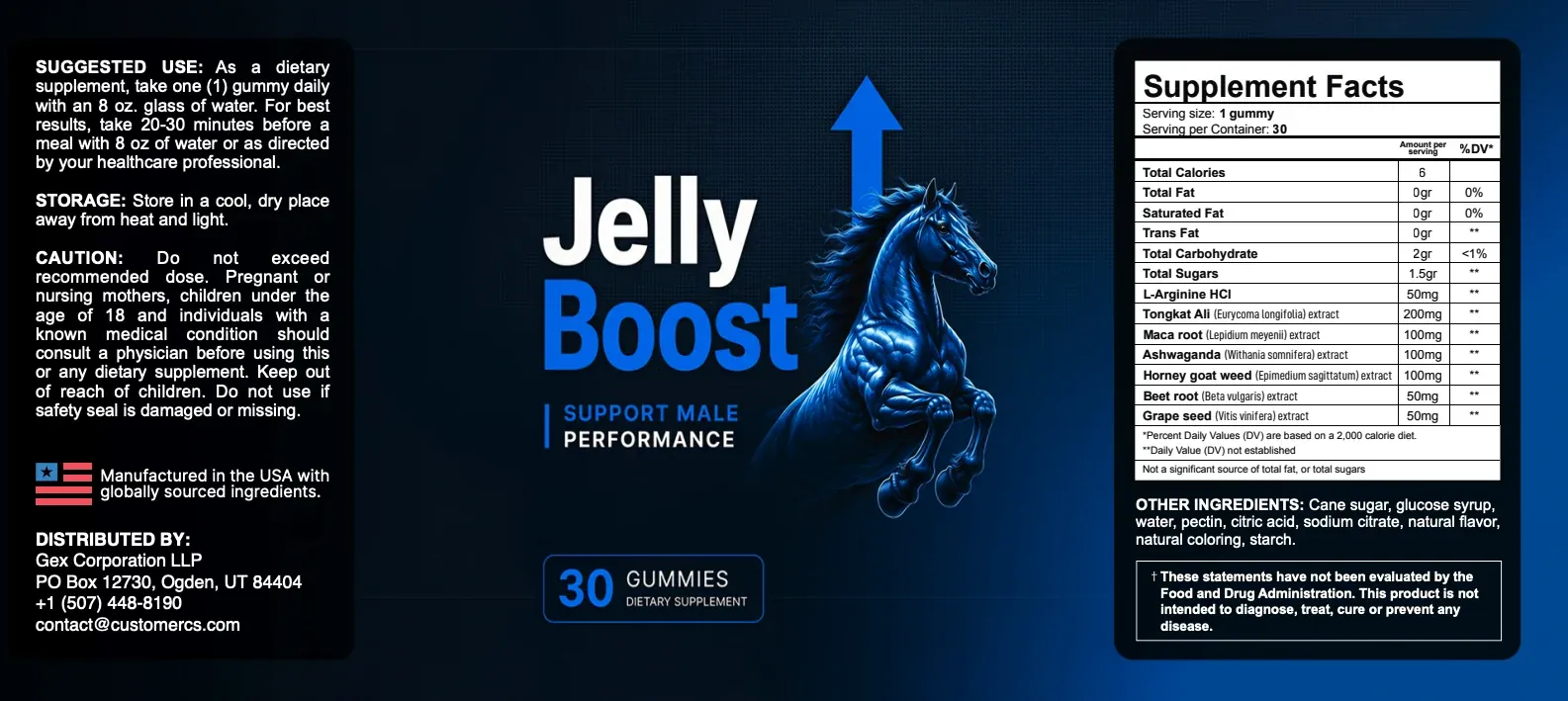
Run the method on a real label and it becomes second nature. JellyBoost passes the first two flags cleanly: there is a Supplement Facts panel, and there is no proprietary blend — all seven actives are printed with their own milligram figures. Tongkat Ali 200 mg, Maca 100 mg, Ashwagandha 100 mg, Horny Goat Weed 100 mg, L-Arginine HCl 50 mg, Beet Root 50 mg, Grape Seed 50 mg, in a one-gummy serving.
On flag three, the lead active is credible: Tongkat Ali at 200 mg sits inside the human-trial band. On flag four, the honest catch is that no standardisation percentage is stated, so you know the weight but not the eurycomanone strength — worth noting. On flag five, the L-Arginine at 50 mg is exactly the gram-scale-in-milligrams situation, so read it as support for the nitric-oxide pathway, not a driver. On flag six, that beet root entry is the panel-versus-marketing mismatch to be aware of. The formula is not perfect — nothing in this category is — but because the panel is fully split, you can actually make these judgements yourself, which is the entire point of learning to read one. See the full breakdown in JellyBoost ingredients explained.
Frequently asked
How do I read a supplement label?
Start at the Supplement Facts panel, not the marketing. Read the serving size, then the per-ingredient milligrams. Check the headline ingredient against the doses used in human trials, look for a standardisation percentage on any extract, and count the actives on the panel versus the sales page. If there is no panel, do not buy.
What is a proprietary blend?
A proprietary blend lists a group of ingredients under one combined milligram total without telling you the amount of each. It is legal, but it means you cannot see whether the headline ingredient is at a real dose or just a trace. Treat a blend as a reason to be sceptical of the whole label.
What is standardization on a supplement label?
Standardisation is the stated percentage of the active compound in an extract - for example, Tongkat Ali standardised to a set percentage of eurycomanone. Without it, two extracts at the same milligrams can differ several-fold in potency, so milligrams alone do not tell you how strong the ingredient really is.
What is the biggest supplement label red flag?
No Supplement Facts panel at all, followed closely by a proprietary blend. Both hide the one thing that decides whether a product can work - the actual per-ingredient dose. After that, watch for gram-scale ingredients listed in double-digit milligrams, which is fairy-dusting for the label rather than for you.
Related reading
- Proprietary blends: how they hide the dose
- Tongkat Ali standardisation and eurycomanone
- JellyBoost ingredients explained: all seven actives
- Tongkat Ali dosage: what 200 mg actually buys you
See the current JellyBoost pricing
Full label, all seven actives, and today’s official-store discount.
These statements have not been evaluated by the Food and Drug Administration. This product is not intended to diagnose, treat, cure or prevent any disease. Speak to a qualified healthcare professional before starting any supplement.