L-Arginine and Nitric Oxide: Why the Dose on Most Labels Is Too Small
Quick Answer: Is 50 mg of L-Arginine Enough?
No. L-arginine is a nitric-oxide precursor, but clinical circulation studies dose it in grams — commonly 3–6 g a day. The 50 mg on JellyBoost's label is a nudge, not a functional standalone dose; realistically it works alongside beet root nitrates on the same pathway. For raising nitric oxide, L-citrulline is the better-absorbed alternative.
- Studied dose: grams (about 3–6 g/day), not milligrams.
- On the label: 50 mg — a pathway nudge, not a driver.
- Better absorbed: L-citrulline raises blood arginine more reliably.
What L-arginine does — the nitric-oxide story
L-arginine is an amino acid, and its relevance to men's health comes down to one job: it is a precursor to nitric oxide. Your body uses an enzyme to convert arginine into nitric oxide, a signalling gas that tells the smooth muscle lining your blood vessels to relax. When those vessels relax, they widen — a process called vasodilation — and blood flow increases. Because erections are fundamentally a blood-flow event, the nitric-oxide pathway is central to circulation and to erectile function, which is exactly why arginine keeps showing up on men's labels.
That mechanism is real and well established. It is the same pathway that beet root nitrates feed from a different direction, and the same one that prescription erectile drugs exploit by preserving the downstream signal. So arginine's presence on a vitality formula is logical. The problem is never whether arginine matters — it is how much of it you are actually getting.
The dose problem: studies use grams, labels use milligrams
Here is the single most important thing to understand about L-arginine, and the reason this article exists. The clinical research that shows arginine doing something useful for circulation uses doses measured in grams. Trials on blood flow, vascular function and exercise commonly use somewhere around 3 to 6 grams a day, and some go higher, often split into two or three doses. That gram-level range is what has actually moved blood-flow markers in humans.
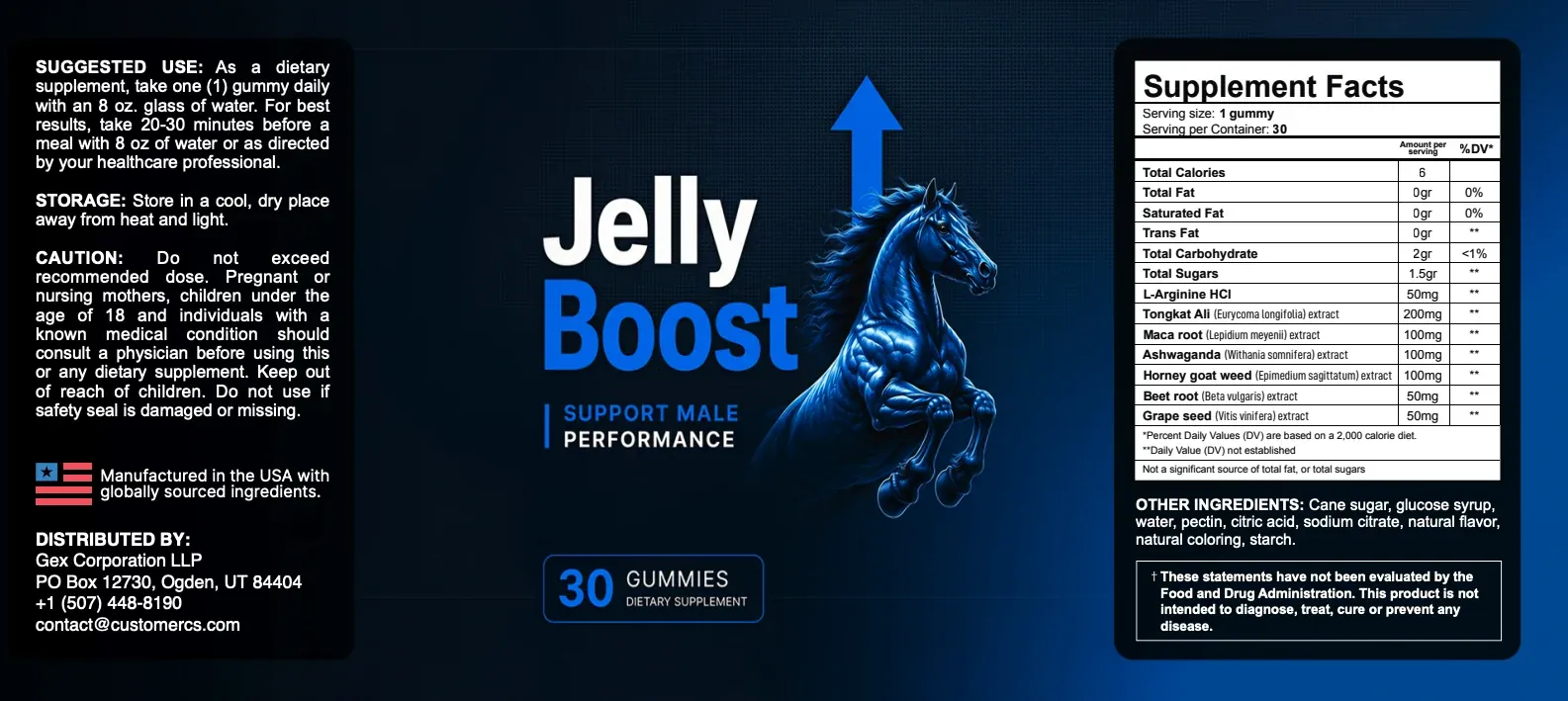
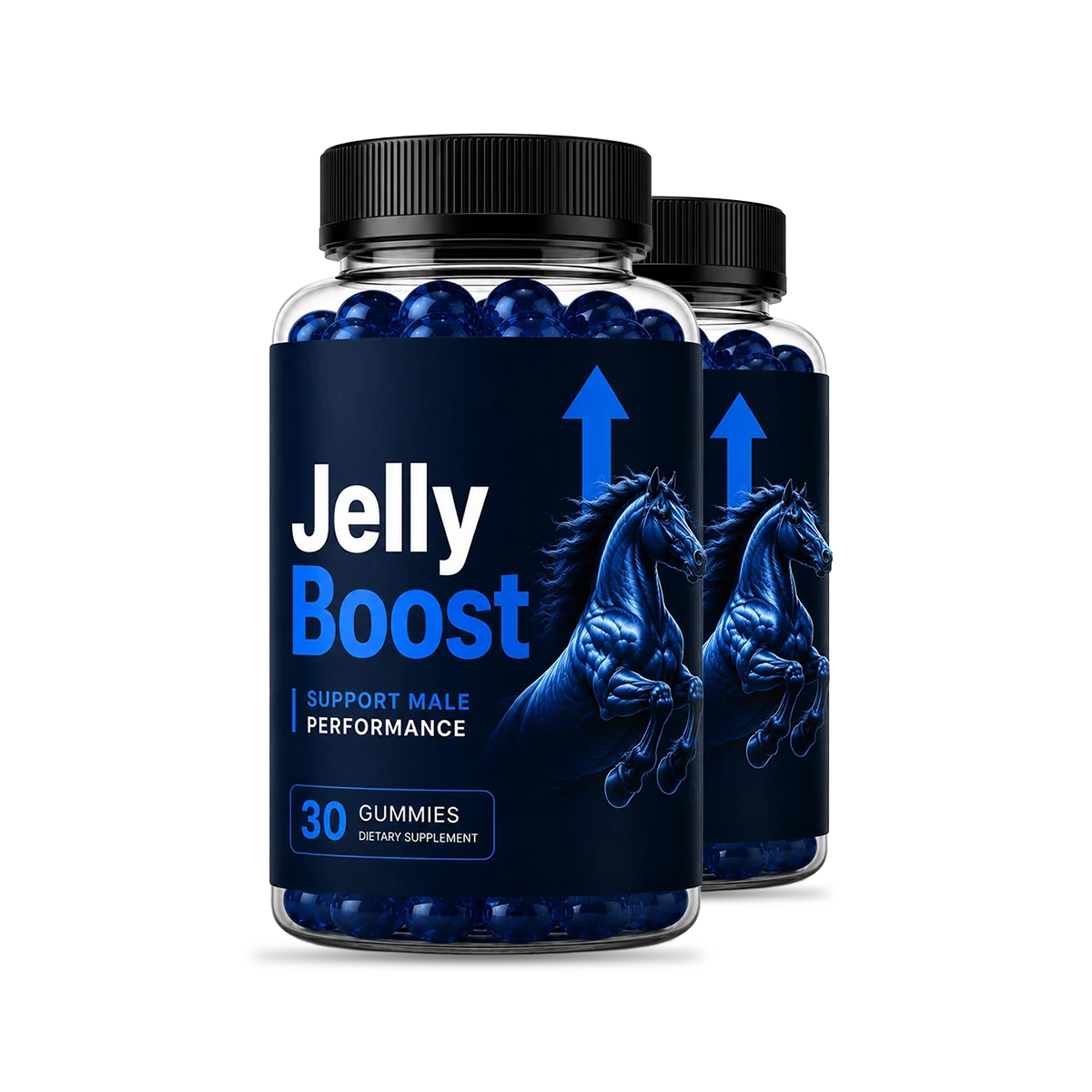
Now look at a typical supplement label. JellyBoost declares 50 mg of L-Arginine HCl. Put those numbers side by side: 3 grams is 3,000 mg. A 50 mg dose is roughly sixty times smaller than the low end of the studied range, and up to a hundred-plus times smaller than the doses at the top end. That is not a smaller version of a clinical dose — it is a different order of magnitude. As we have put it elsewhere on this site, an amino acid dosed in milligrams where studies use grams is decoration, not a mechanism.
This is not unique to one product; it is endemic to the category. Arginine is a bulky ingredient, and fitting a real gram-level dose into a gummy or a small capsule blend is difficult, so labels often include a token amount so the ingredient can appear on the panel. The name is doing marketing work that the milligrams cannot back up. The honest reading of 50 mg is that it is a nudge on the nitric-oxide pathway, not a functional standalone dose.
So why is it on the label at all?
Two reasons, one cynical and one defensible. The cynical one: "L-arginine" is a recognised name that buyers associate with blood flow and pumps, so its mere presence sells. The defensible one: on a formula that also contains beet root, arginine is not being asked to work alone. Beet root supplies dietary nitrates, which the body converts to nitric oxide through a separate, arginine-independent route. Two small inputs feeding the same nitric-oxide pathway from different directions is a more sensible way to read a 50 mg arginine line than pretending it is a circulation dose by itself.
That still leaves the beet root itself dosed at 50 mg, which is also on the light side for nitrates, so this is a supporting-cast contribution to blood flow rather than the engine of the formula. On JellyBoost specifically, the heavier lifting is meant to come from Tongkat Ali at a credible 200 mg and ashwagandha on the stress side; the nitric-oxide ingredients are best understood as complementary. If your primary goal is circulation, this is the part of the label to be most clear-eyed about.
L-arginine vs L-citrulline: the absorption problem
Even at proper gram-level doses, oral L-arginine has a weakness: absorption. A large share of the arginine you swallow is broken down in the gut and liver before it ever reaches your bloodstream — a first-pass effect that blunts how much actually raises your circulating arginine. This is why high oral doses can also cause digestive upset in some people, and why the results from arginine supplementation have been inconsistent even in studies that used real doses.
L-citrulline is the workaround the research has converged on. Citrulline largely escapes that first-pass breakdown, gets absorbed, and is then converted into arginine inside the body — so, counterintuitively, taking citrulline can raise your blood arginine levels more effectively than taking arginine directly. For anyone whose actual goal is boosting nitric oxide, citrulline (often as citrulline malate, dosed in grams) is frequently the smarter pick, and many newer men's and sports formulas have switched to it for exactly this reason. If you are shopping for a dedicated blood-flow product, seeing citrulline at a gram-level dose is a better sign than seeing arginine listed in milligrams.
How to use this when you read a label
The practical rules are simple. First, when you see L-arginine on a panel, check the number: if it is in milligrams, treat it as a token, not a functional dose. Second, look for whether the same product feeds nitric oxide from another angle — beet root nitrates or citrulline — because a stack that hits the pathway from two directions is more coherent than a single underdosed amino acid. Third, if circulation is genuinely your main objective, consider a standalone citrulline at gram-level dosing rather than relying on the arginine line in a multi-ingredient gummy. None of this means a formula is bad; it means you should know which ingredients are pulling their weight and which are along for the label.
Safety notes
At the doses found in a gummy, arginine poses little concern for most people. At the gram-level doses used in studies, the most common issue is gastrointestinal — bloating, cramping or diarrhoea. More importantly, because arginine promotes vasodilation and can lower blood pressure, it should be used cautiously alongside blood-pressure medication, nitrates or erectile-dysfunction drugs, and anyone with low blood pressure, a recent heart event, or on such medications should speak to a doctor first. The same caution applies to citrulline. As always, this is general information, not medical advice.
Related reading
- JellyBoost ingredients explained: the full seven-active label
- Beet root nitrates and blood flow: the other NO pathway
- How to improve blood flow for erections naturally
- Horny goat weed (icariin): what the evidence actually shows
Frequently asked
How much L-arginine for blood flow?
Clinical circulation studies dose L-arginine in grams, not milligrams - commonly around 3 to 6 grams a day, and sometimes more, often split into two or three doses. That gram-level range is what has moved blood-flow markers in trials, so it is the yardstick any label should be measured against.
Is 50 mg of L-arginine enough?
No. 50 mg is roughly sixty to a hundred times smaller than the gram-level doses used in the research, so on its own it is a nudge rather than a functional standalone dose. Its realistic role on a label is to work alongside beet root nitrates on the same nitric-oxide pathway, not to drive circulation by itself.
Does L-arginine help erections?
At gram-level doses it can support the nitric-oxide pathway that governs blood flow to erectile tissue, and some studies - often combining it with other compounds - report modest benefit. At the milligram amounts found on most gummy labels the effect is unlikely to be meaningful on its own, which is why dose, not just presence on the label, is what matters.
L-arginine vs L-citrulline - which is better?
For raising nitric oxide, L-citrulline is often the better-absorbed choice. A large share of oral L-arginine is broken down in the gut and liver before it reaches the bloodstream, whereas L-citrulline survives that first pass and is then converted into arginine in the body, raising blood arginine more reliably. Many newer formulas use citrulline for exactly this reason.
See the current JellyBoost pricing
Full label, all seven actives, and today’s official-store discount.
These statements have not been evaluated by the Food and Drug Administration. This product is not intended to diagnose, treat, cure or prevent any disease. Speak to a qualified healthcare professional before starting any supplement.