Ashwagandha, Cortisol and Testosterone: The Stress-Drive Connection
Quick Answer: Does Ashwagandha Raise Testosterone?
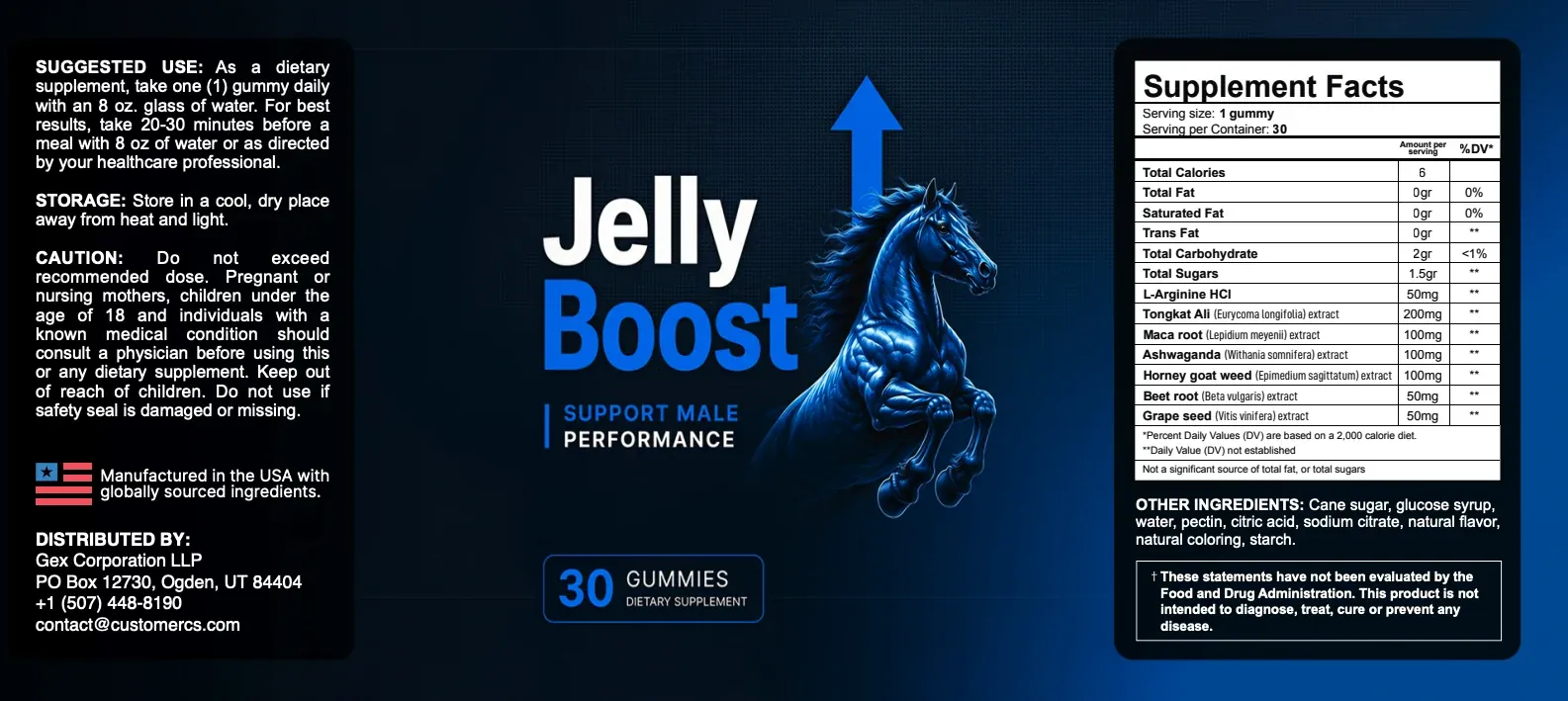
Ashwagandha carries the strongest human evidence of anything on this label. It reliably lowers cortisol and perceived stress, and several trials report modest hormone rises — around 14–15% in testosterone and about 18% in DHEA-S. Studied doses run 250–600 mg a day; JellyBoost uses 100 mg, on the low side of that band.
- Best evidence for: lower cortisol and perceived stress.
- Hormones: ~14–15% testosterone and ~18% DHEA-S rises reported.
- Studied dose: 250–600 mg daily — the label's 100 mg is modest.

Why stress belongs in a testosterone conversation
Most men shopping for a vitality supplement are looking for a lever that pushes something up — testosterone, drive, energy. Ashwagandha earns its place by working the other end of the system: it pulls something down. That something is cortisol, the body's main stress hormone, and the reason it matters is that cortisol and testosterone tend to move in opposition. When one is chronically elevated, the other rarely thrives.
Chronic stress is one of the clearest and least glamorous drags on male drive. It is not a marketing villain; it is a physiological one. Sustained high cortisol is associated with worse sleep, blunted morning testosterone, lower libido and flatter energy. If you have been running hot for months — work pressure, poor sleep, no recovery — then no herb that only nudges testosterone upward will do much while the cortisol tap is still open. That is precisely the gap an adaptogen like ashwagandha is meant to address.
What ashwagandha actually is
Ashwagandha (Withania somnifera) is a small shrub used in Ayurvedic medicine for centuries, classed today as an adaptogen — a plant that helps the body regulate its stress response rather than stimulating or sedating it directly. Modern supplements almost always use a concentrated root extract, and the better-studied products are standardised to a set percentage of withanolides, the active compounds. As with Tongkat Ali, standardisation matters: two products at the same milligram figure can differ in potency if one is a raw powder and the other a concentrated, standardised extract.
The evidence: cortisol first, hormones second
Of everything on the JellyBoost label, ashwagandha has the strongest and most repeated human evidence base. The most consistent finding across randomised trials is a reduction in cortisol and in self-reported stress and anxiety. In stress-focused studies, participants taking a standardised extract for around eight weeks reported meaningfully lower perceived stress and showed lower serum cortisol than placebo groups. That is the headline effect, and it is well supported.
The hormone story sits on top of that, and it is more modest. Several trials in stressed or older men have reported testosterone rises in the region of 14 to 15 percent, and DHEA-S — an adrenal precursor hormone — rising by roughly 18 percent, over eight to sixteen weeks. Some studies in men also reported improvements in sperm parameters. These are genuine, statistically real effects, but two honest qualifiers apply. First, the magnitude is moderate; a 14 percent nudge is not the same as clinical testosterone therapy. Second, the effect appears strongest in men who are stressed, sleeping poorly, or starting from a lower base — not in men who are already well-rested and optimised.
Put together, the fairest summary is this: ashwagandha's proven job is calming the stress axis, and the testosterone benefit is best understood as a downstream consequence of taking the cortisol brakes off, not a direct hormonal push.
How much ashwagandha, and where 100 mg lands
Human trials generally dose 250 to 600 mg a day of a standardised root extract — commonly split as 300 mg twice daily, or taken as a single 600 mg dose. That is the band that produced the cortisol and hormone results above. JellyBoost declares 100 mg per gummy, which sits on the low side of the studied range.
We will say plainly what that means. At 100 mg you are below the amounts that generated the strongest trial results, so it is fair to expect a gentler effect than a dedicated 600 mg ashwagandha capsule would give. On a seven-ingredient stack, 100 mg reads as a sensible supporting contribution — the adaptogen doing quiet work on the stress side while Tongkat Ali at a credible 200 mg carries the hormonal end and the nitrate-pathway ingredients handle blood flow. If your single priority is stress and cortisol, a standalone standardised ashwagandha at 300–600 mg is the more direct route. If you want a broader men's formula, 100 mg here is a reasonable, honest inclusion rather than a headline to lean on.
How long until it works
Ashwagandha is not a same-day supplement. The stress and cortisol trials almost all ran for eight weeks, and that is a fair minimum before you decide whether it is doing anything for you. Anecdotally, many men notice a calmer, steadier response to stress and better sleep quality within the first two to three weeks — but the measurable hormone changes in the studies were assessed at around the eight-week mark. Treat it like ashwagandha's cousin maca: a build-up ingredient that rewards consistency and punishes stop-start use.
Timing within the day matters less than most people think. Because you are aiming for a steady background effect on the stress axis rather than an acute hit, the best time to take ashwagandha is simply the time you will remember to take it every day. Some men prefer the evening because the calming effect can support sleep; others split it morning and night to mirror the twice-daily dosing used in trials. Any of these is fine — daily consistency is what moved the numbers in the studies, not the clock.
Does it actually help libido and drive?
Indirectly, and that indirectness is the whole point. Ashwagandha is not a desire stimulant the way maca is pitched to be. Its route to better drive runs through stress: lower cortisol, better sleep, a modest testosterone nudge, and a nervous system that is not stuck in fight-or-flight. For a man whose flat libido is genuinely stress- and sleep-driven — which is a large share of cases — that indirect route can be more effective than a direct one, because it fixes an underlying cause rather than papering over it.
This is also why ashwagandha pairs so naturally with the lifestyle levers that matter most for testosterone: prioritising sleep, resistance training, and not letting alcohol and stress run unchecked. The supplement supports the same system your habits do; neither works well while the other is being ignored.
Safety and who should be careful
Ashwagandha is generally well tolerated in trials, with side effects usually limited to mild drowsiness or digestive upset. A few groups should be more cautious: it can lower blood sugar and blood pressure, it may interact with thyroid, sedative and immunosuppressant medications, and it is generally not recommended during pregnancy. Rare reports of liver issues have been noted with certain products, which is another reason to favour a standardised extract from a reputable source. Anyone with a medical condition or on medication should clear it with a doctor first. None of this makes it a high-risk ingredient — it is one of the safer, better-evidenced botanicals in the category — but honest coverage means naming the caveats, not just the upside.
Related reading
- JellyBoost ingredients explained: the full seven-active label
- Stress, cortisol and male sex drive: what actually happens
- Ashwagandha vs Tongkat Ali: which one, and when
- Sleep and testosterone: the overnight connection
Frequently asked
Does ashwagandha raise testosterone?
In several human trials it produced modest rises - roughly 14 to 15 percent in testosterone and about 18 percent in DHEA-S in stressed or older men. The effect is real but moderate, and it appears strongest in men who are stressed, sleeping badly or starting from a low base, rather than in already-optimised men.
How much ashwagandha per day?
Human studies typically use 250 to 600 mg a day of a standardised root extract, most often 300 mg twice daily or a single 600 mg dose. That is the band to measure any label against. A 100 mg amount sits on the low side of what has been studied.
How long until ashwagandha works?
Stress and cortisol trials usually run eight weeks, and that is a fair minimum before you judge it. Some men notice calmer, steadier stress and better sleep within two to three weeks, but the hormone and drive changes measured in studies were assessed at the eight-week mark.
Does ashwagandha help libido?
Indirectly, yes. Its clearest job is lowering cortisol and perceived stress, and chronic stress is one of the biggest unglamorous drags on male drive. By taking the brakes off - better stress, better sleep, a modest testosterone nudge - it can support libido rather than acting as a direct desire stimulant the way maca does.
See the current JellyBoost pricing
Full label, all seven actives, and today’s official-store discount.
These statements have not been evaluated by the Food and Drug Administration. This product is not intended to diagnose, treat, cure or prevent any disease. Speak to a qualified healthcare professional before starting any supplement.