Maca Root for Men: Libido, Dose, and How Long It Takes to Work
Quick Answer: How Much Maca Should a Man Take?
Most human studies use 1,500 to 3,000 mg of maca a day, taken for two to eight weeks, to move libido and sperm quality. Crucially, maca works on desire — it does not raise testosterone directly. JellyBoost carries 100 mg, so its honest role here is a supporting ingredient inside a stack, not a standalone maca dose.
- Studied dose: 1,500–3,000 mg daily, most trials running 8–12 weeks.
- Mechanism: non-hormonal — it lifts desire without raising testosterone.
- On the label: 100 mg — a supporting role, below a solo maca dose.
What maca actually is
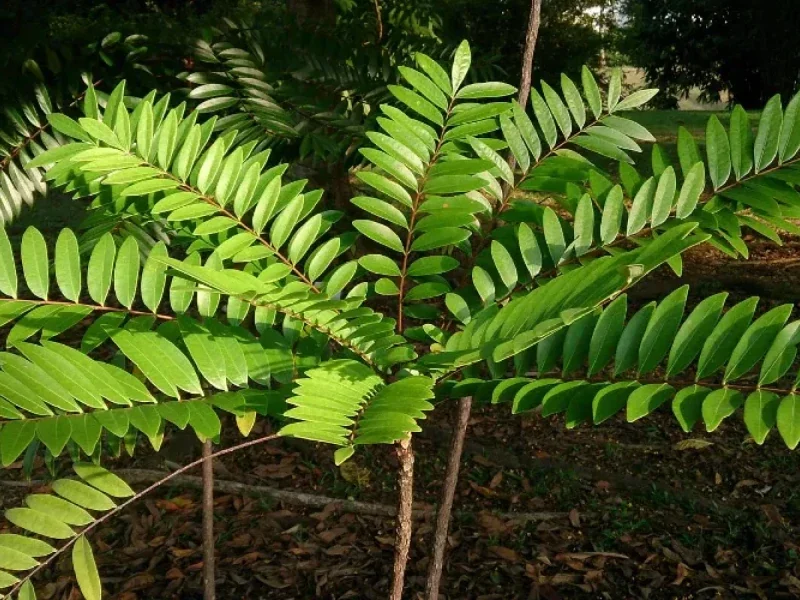
Maca is a cruciferous root vegetable, Lepidium meyenii, grown high in the Peruvian Andes and eaten there as food for centuries. In supplement form it is usually sold as a dried root powder or a concentrated extract, and it comes in yellow, red and black varieties. It is not a hormone, not a steroid, and not a stimulant. That single fact reshapes every reasonable expectation you can have of it.
Because it is a food-grade root rather than a potent isolated compound, the doses that do anything measurable are large — think grams, not milligrams. This is the opposite of an ingredient like Tongkat Ali, where a standardised extract works at a couple of hundred milligrams. With maca, the number on the label needs to be read against a much bigger yardstick, and that is where a lot of men's formulas quietly fall short.
What the evidence says about maca and libido
Maca has the broadest evidence base of any herb on this label when it comes to one specific outcome: sexual desire. Controlled trials in both men and women have reported improvements in self-rated libido after several weeks of daily use, and the effect shows up whether or not the person had a low starting point. It is one of the few botanicals in the vitality aisle with repeated, independent human data pointing in the same direction.
On top of desire, maca has a smaller but consistent line of evidence around male fertility markers — sperm count, concentration and motility have improved in some trials of healthy men. That is a different mechanism from erection quality or blood flow, and it is worth separating out. Maca is a desire-and-fertility ingredient, not primarily a circulation one. If your interest is firmness rather than drive, blood-flow actives like beet root nitrates and L-citrulline are a better fit for the job.
The honest caveats: many maca studies are small, some are industry-funded, and the standardisation of maca products varies widely between brands. The direction of the evidence is genuinely encouraging for libido; the certainty is moderate, not settled. Anyone who tells you maca is clinically proven to fix low desire is overselling it.
Does maca raise testosterone? No — and that is fine
This is the single most common misconception about maca, so it is worth being blunt. The controlled trials that actually measured hormones did not find that maca raises testosterone. They also did not find changes in luteinising hormone, follicle-stimulating hormone or oestrogen. Maca improves how men feel about their libido without moving the hormone panel — which means it works through non-hormonal routes that are still being mapped.
Why does that matter? Because it tells you what maca is for. If your goal is to nudge testosterone upward, maca is the wrong tool, and you should look at ingredients and habits with a plausible hormonal mechanism instead — ashwagandha for stress-driven suppression, plus the unglamorous levers of sleep, resistance training and correcting a vitamin D deficiency. But if your goal is desire itself, the fact that maca skips the hormone route is a feature, not a bug: it can help drive without the risks that come from pushing hormones around.
How long maca takes to work
Maca is a build-up ingredient, not a same-day one. It does not spike anything within an hour the way caffeine or a PDE5 inhibitor does. In the positive libido studies, the trial periods ran roughly eight to twelve weeks, and where researchers tracked the timeline, self-rated desire tended to shift somewhere between week two and week eight of consistent daily use.
The practical takeaway is patience and consistency. If you take maca for four days, feel nothing, and stop, you have not actually tested it. Give a proper maca dose a run of at least two months, taken every day, before deciding whether it does anything for you. Skipping days resets the clock more than most people assume, because the effect appears to depend on steady accumulation rather than a single dose peaking in your bloodstream.
How much maca — and why 100 mg is a stack dose, not a solo one
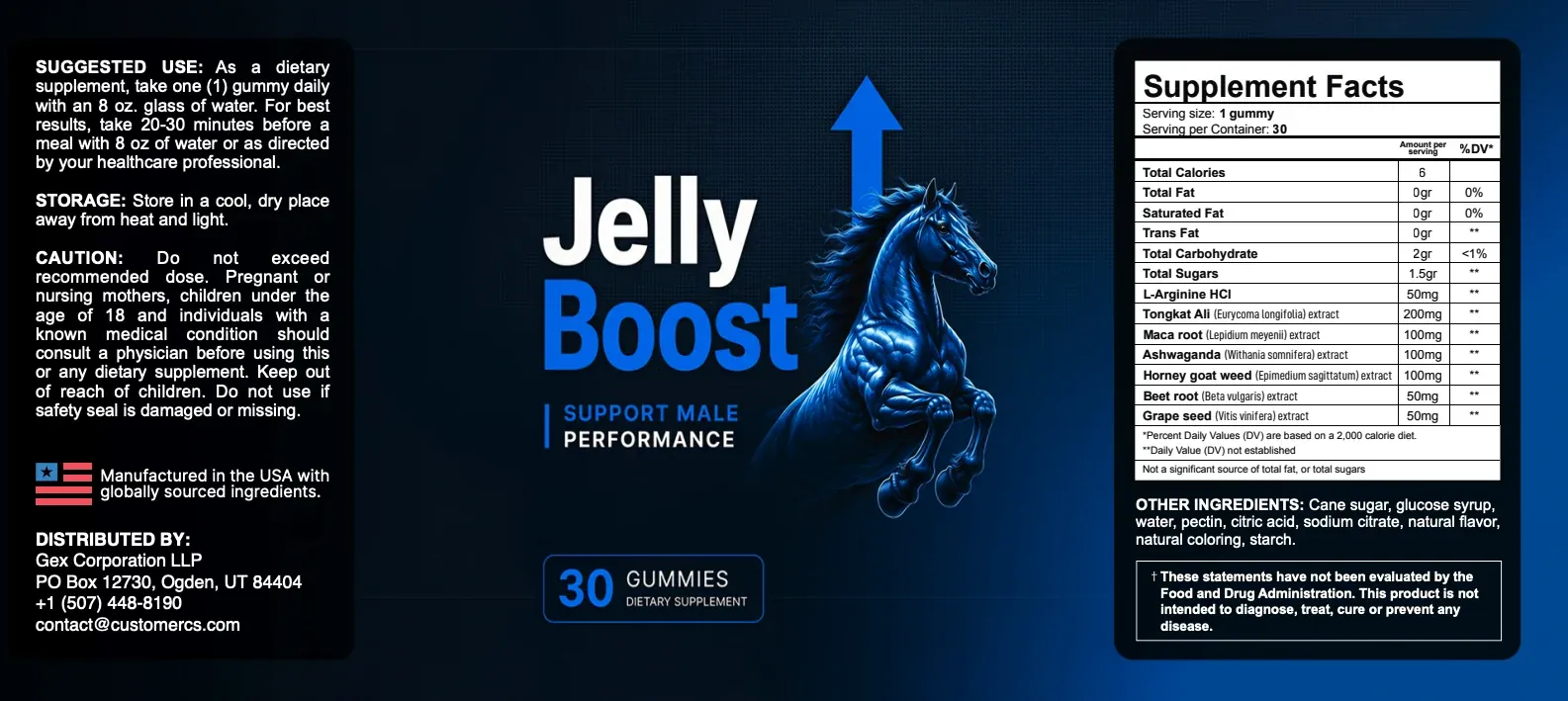
Here is where we have to be straight with you, because it is exactly the kind of thing the sales page will not say. Human maca trials use 1,500 to 3,000 mg a day. JellyBoost declares 100 mg per gummy. That is somewhere between fifteen and thirty times smaller than the studied amount. On its own, 100 mg of maca is not going to reproduce the libido results you read about in the trials, and it would be dishonest to imply otherwise.
So what is 100 mg of maca doing on the label at all? It is playing a supporting role inside a seven-ingredient stack, not acting as a standalone maca product. The logic of a formula like this is that several complementary actives — Tongkat Ali at a credible 200 mg, ashwagandha for stress, nitrate-pathway ingredients for blood flow — each contribute a piece, and maca adds a modest, non-hormonal nudge toward desire on top. That is a reasonable design choice. What is not reasonable is expecting the maca component alone to behave like a 1,500 mg maca capsule.
If maca specifically is the thing you care about — you want desire support and nothing else — then the honest recommendation is a dedicated, higher-dose maca product taken at 1,500 mg or more. If you want a broader men's formula where maca is one contributor among several, a stack makes sense and the 100 mg reads as intentional supporting cast rather than a headline you are meant to lean on. Either way, read the panel and match the number against the trial band before you decide.
Who maca suits — and a few safety notes
Maca has a good safety record at food-level doses; it is eaten as a staple in the Andes and the trials report few side effects beyond occasional mild digestive upset. Because it is a cruciferous vegetable, very large amounts of raw maca are sometimes flagged for people with thyroid conditions, so gelatinised (cooked) maca is often preferred and anyone with a thyroid issue should check with their doctor first. As with any supplement, if you take medication or have a medical condition, clear it with a healthcare professional before starting.
It suits men who want to support desire without touching their hormones, who are willing to be consistent for a couple of months, and who understand it is one lever among several. It does not suit anyone looking for an instant effect, a testosterone increase, or a fix for an erection-firmness problem that is really about blood flow. Matching the ingredient to the actual goal is most of the battle.
Related reading
- JellyBoost ingredients explained: the full seven-active label
- Ashwagandha, cortisol and testosterone: the stress–drive connection
- How to boost libido naturally in your 40s and 50s
- Tongkat Ali dosage: what 200 mg actually buys you
Frequently asked
How much maca should a man take?
Human studies on libido and sperm quality have mostly used 1,500 to 3,000 mg of dried maca root a day, usually as a single daily amount or split across meals. That is the band to compare any label against - and 1,500 mg is a reasonable floor if you are dosing maca on its own.
Does maca increase testosterone?
No. The controlled trials that measured hormones did not find that maca raises testosterone, luteinising hormone or oestrogen. Maca appears to work on desire and sexual function through non-hormonal routes, so it is the wrong herb to pick if raising testosterone is your only goal.
How long does maca take to work?
Most positive libido studies ran for eight to twelve weeks, with some reporting a shift in desire from around week two to week eight. Maca is a build-up ingredient, not a same-day one, so give it a consistent daily run of at least two months before judging it.
Is 100 mg of maca enough?
100 mg is well below the 1,500 to 3,000 mg used in the trials, so it is not a standalone maca dose. On the JellyBoost label it plays a supporting role inside a seven-ingredient stack rather than acting as a solo maca product. If maca alone is what you want, a dedicated higher-dose maca is the honest choice.
See the current JellyBoost pricing
Full label, all seven actives, and today’s official-store discount.


These statements have not been evaluated by the Food and Drug Administration. This product is not intended to diagnose, treat, cure or prevent any disease. Speak to a qualified healthcare professional before starting any supplement.